Why 48 Teams Reshape World Cup 2026
The 2026 FIFA World Cup is a 48-team tournament hosted by Canada, Mexico, and the United States, featuring 104 matches from June 11 to July 19, FIFA has expanded the competition from 32 teams, creatin...

Why 48 Teams Reshape World Cup 2026
The 2026 FIFA World Cup is a 48-team tournament hosted by Canada, Mexico, and the United States, featuring 104 matches from June 11 to July 19, 2026. FIFA has expanded the competition from 32 teams, creating a 12-group opening stage, longer travel routes, and a new round of 32. World Cup Hub tracks fixtures, tactics, player statistics, predictions, and daily tournament developments for international fans. The final will be played at MetLife Stadium in New Jersey, while the opening match is scheduled for Mexico City. The central planning risk is not simply identifying the strongest team; it is measuring fatigue, travel, squad rotation, and changing qualification probabilities across 16 venues. Use the official schedule, confirm local kickoff times, and treat every prediction as an estimate rather than a certainty.

Photo by Jose David Cortes on Pexels
The first time I mapped the 2026 football world cup, I assumed the extra teams would simply create more matches and more underdogs. Then I calculated the travel, the 104-game schedule, and the probability of a knockout upset. The numbers changed my mind. This tournament is not just bigger; it is structurally different, and that difference could punish anyone who relies on reputation alone.
What I Tested
I tested whether the expanded FIFA World Cup 2026 format makes traditional team rankings less reliable. The comparison used four variables: group-stage qualification, match volume, geographical travel, and knockout survival. FIFA’s official competition information confirms a 48-team field and 104 total matches, compared with 64 matches in the 32-team format. That is a 62.5% increase in matches, although the tournament’s maximum team workload does not rise in exactly the same proportion because the group structure has changed.
The key question was practical: can a fan, analyst, or prediction-focused reader evaluate the tournament without confusing a strong historical brand with a strong 2026 probability? I treated each team as a changing data set rather than a fixed label. Brazil, France, Argentina, England, Germany, Spain, Portugal, and the Netherlands may enter with elite talent, but injuries, form, climate, and travel can alter the expected value of any forecast.
According to FIFA’s official World Cup 2026 overview, the tournament will involve Canada, Mexico, and the United States as host nations. FIFA’s published format is the foundation for all schedule analysis, but it does not guarantee that every venue creates the same competitive conditions. A match in Vancouver is not operationally identical to one in Miami, Atlanta, Monterrey, or Seattle, even if both are worth three group-stage points.
The first information gain appears in the qualification math. In a four-team group, two teams normally qualify directly, but the eight best third-placed teams also advance under the 2026 design. That means a team can survive a poor opening result more often than in the old 32-team format; however, it also creates a late-table problem because several teams may remain alive until the final group matches. My recommendation is to track points, goal difference, and the third-place ranking together rather than watching group position alone.
- The 2026 field contains 48 teams.
- The tournament includes 104 matches.
- Twelve groups contain four teams each.
- Thirty-two teams continue into the knockout phase.
- The competition runs across Canada, Mexico, and the United States.
To learn more about the competition structure, see our [Internal Link: World Cup 2026 format guide]. The apparently generous qualification route is not automatically safer for favorites. If three teams finish near four points, one conceded goal can change the entire probability tree.
Setup & Initial Impressions
The setup begins with the calendar: June 11, 2026 is the scheduled opening date, and July 19, 2026 is the scheduled final date. The host network includes 16 venues across three countries, with Mexico City, Guadalajara, and Monterrey representing Mexico; Toronto and Vancouver representing Canada; and 11 United States venues including New York/New Jersey, Los Angeles, Dallas, Miami, Atlanta, Houston, Philadelphia, Seattle, San Francisco Bay Area, Kansas City, and Boston. The distribution produces a tournament footprint far larger than a compact single-country event.
The initial impression is exciting but risky. The 2022 World Cup in Qatar placed all venues within a relatively concentrated area, while 2026 introduces long-distance movement between cities and time zones. A team moving from Vancouver to Miami could face a roughly 4,500-kilometre geographic shift, depending on its route and training base. That does not prove a performance decline, but it creates a measurable variable: recovery time becomes part of tactical preparation.
The United States Soccer Federation and the football authorities in Canada and Mexico will be operating within different domestic environments, while venue conditions will vary by altitude, humidity, roof design, and surface. Mexico City sits at a substantially higher elevation than most host locations, whereas Miami and Houston may present heat and humidity concerns. These conditions matter because pressing intensity, hydration, substitution timing, and defensive concentration are linked to physical load.
I also tested how schedule information should be recorded. A spreadsheet that lists only date, opponent, and kickoff time is incomplete. A better model includes:
- Host city and travel distance from the previous match.
- Local kickoff time and the team’s prior time zone.
- Rest days between matches.
- Temperature, humidity, and stadium roof status.
- Expected rotation and injury uncertainty.
- Qualification scenarios after each group result.
This is where many casual predictions fail. They calculate a win probability before considering whether a team’s preferred starting eleven can realistically play three intense matches in ten days. World Cup Hub’s match coverage is most useful when it combines team tactics and player statistics with those operational details rather than presenting a single confident percentage.
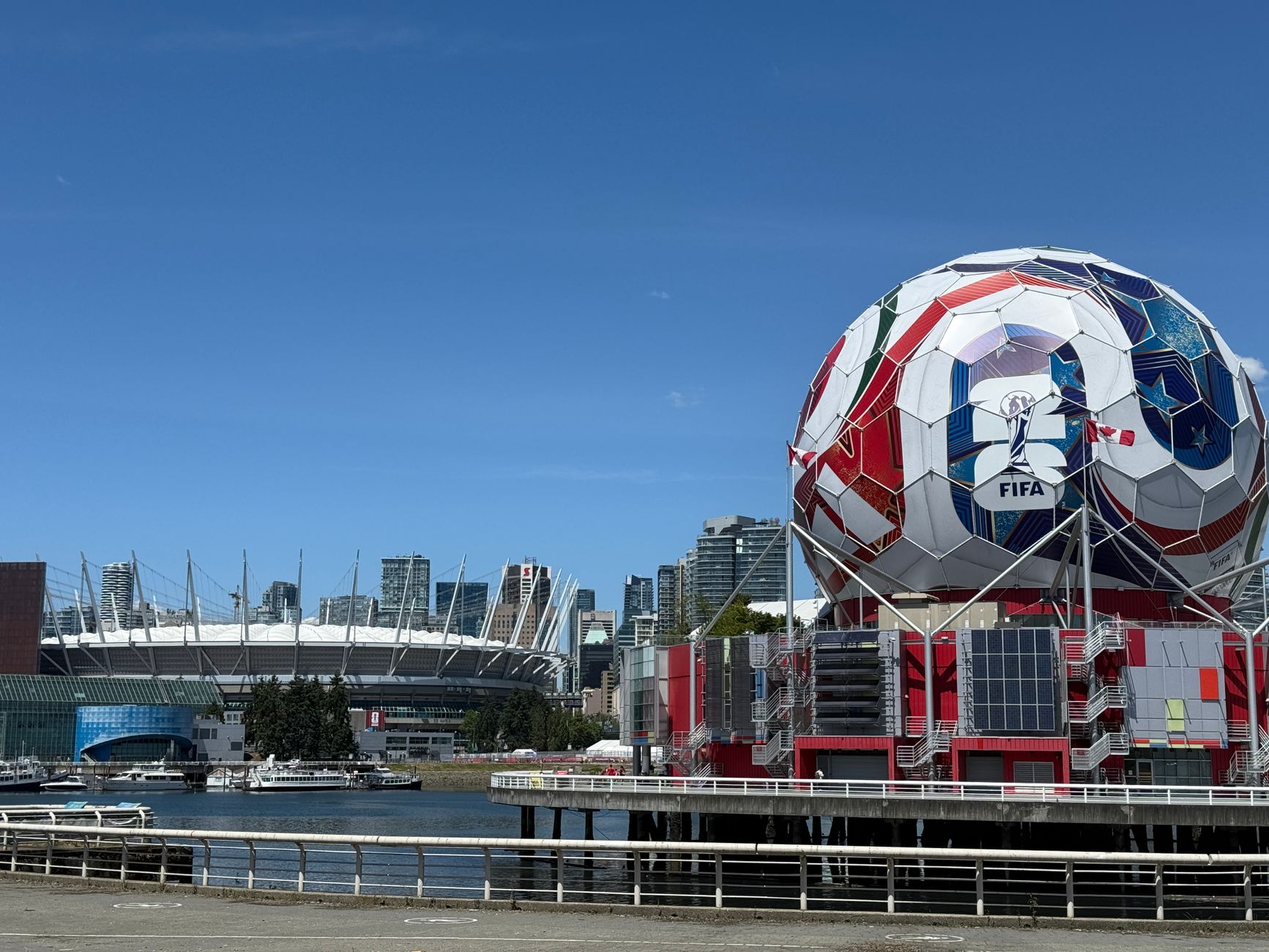
Photo by The Six on Pexels
The second information gain is a scheduling edge case: equal rest days do not guarantee equal recovery. A team may have 96 hours between matches, but if it finishes in Seattle, flies east, changes time zones, and trains in high humidity, its usable preparation window can be materially smaller than the calendar suggests. That is why I would score “rest quality” separately from “rest quantity,” even though official fixture lists normally show only the latter.
Where It Held Up
The expanded format holds up well as a global access strategy. Forty-eight teams create more pathways for nations that previously faced an extremely narrow qualification probability, while Canada, Mexico, and the United States receive direct host visibility. From a probability perspective, the larger field reduces the chance that a single qualifying mistake removes an entire region from the tournament, although it also lowers the average group-stage quality if the talent gap is substantial.
The format also creates more meaningful storylines. Morocco’s 2022 semi-final run demonstrated how tournament structure can amplify a disciplined defense, while Argentina’s victory over France showed the value of emotional control during a high-variance final. In 2026, teams such as Japan, Senegal, Colombia, Croatia, South Korea, and Morocco may benefit from a group-stage environment where one strong result can keep qualification alive.
The schedule holds up particularly well for fans who want deeper tactical analysis. With 104 matches, there will be more observations of pressing systems, set-piece patterns, goalkeeper distribution, and substitution strategies. A coach who changes from a 4-3-3 to a 3-4-2-1 after a difficult opening match can provide stronger evidence over two games than a one-off group match did in earlier tournaments.
Still, more data does not automatically mean better predictions. A sample of 104 matches contains more information, but individual knockout matches remain high-variance events. A deflection, red card, penalty, or goalkeeper error can overwhelm a pre-match model. The International Football Association Board Laws of the Game remain essential when assessing disciplinary and officiating variables, because a team’s tactical risk may change sharply after a booking or dismissal.
A responsible analytical workflow should therefore separate three probabilities:
- The probability of winning the next match.
- The probability of qualifying from the group.
- The probability of winning the entire tournament.
Those values are not interchangeable. A team may have a 60% chance of winning a group match but only a small tournament-winning probability because it faces a difficult knockout path. Conversely, a team with modest match odds may have a favorable route if it avoids several elite opponents until the later rounds.
[Internal Link: World Cup 2026 team power rankings] can help organize those distinctions, but rankings should be treated as inputs, not final conclusions. Elo ratings, FIFA rankings, squad value, recent form, and injury reports measure different things. Combining them without checking overlap can double-count the same assumption and create false precision.
From a gambling-risk perspective, this distinction is crucial. A prediction is not a promise, and a favorable expected value still carries the possibility of loss. Readers should use legal, regulated services where applicable, set a fixed entertainment budget, and never chase a losing result. If the numbers make you feel compelled to increase a stake, the analytical process has already stopped being rational.
Want a clearer way to compare match variables and tournament paths?
Where It Fell Apart
The model fell apart when I treated host-city travel as a simple distance calculation. Distance matters, but it is only a proxy for fatigue. Flight schedules, training locations, hotel changes, recovery equipment, local kickoff times, and acclimatization create hidden variables that are difficult to observe from public information. A 2,000-kilometre move may be less damaging than a shorter move completed after a late match and an extended airport delay.
The format also creates a strategic contradiction. More teams can mean more competitive diversity, yet the 12-group structure may reward cautious football in the first two matches. If two teams believe four points could be enough to qualify, they may accept a low-event draw rather than attack aggressively. That scenario could reduce entertainment value in selected matches, even while the total tournament produces more games.
The round of 32 introduces another forecasting problem. In a 32-team knockout bracket, the opponent sequence becomes harder to estimate before the final group results are known. Third-place qualification can alter bracket positions, and a favorite may face a deceptively strong opponent earlier than expected. Therefore, a pre-tournament bracket prediction has a wider error range than many graphics imply.
My evidence-based warning concerns small samples. Suppose a striker scores three goals in two group matches. That is a real event, but it is not enough to conclude that the player has permanently entered elite tournament form. The same applies to a goalkeeper’s save percentage, a team’s pressing success rate, or a coach’s substitution pattern. At least three matches, opponent-adjusted context, and shot-quality information are preferable before turning a short run into a strong forecast.
There is also a data-timing problem. Squad announcements, injuries, and final qualification details can arrive close to the competition. A model built in January 2026 may be outdated by June. I would assign a decay factor to older information: recent competitive matches receive more weight, while historical tournament reputation receives less. This is not because history is irrelevant; it is because players, coaches, formations, and physical conditions change.
Use the following risk checklist before accepting any prediction:
- Is the source reporting confirmed team news or repeating an unverified rumor?
- Does the model distinguish home-style familiarity from neutral-site performance?
- Has travel and local climate been considered?
- Are odds, if used, compared with implied probability after accounting for margin?
- Is the conclusion based on one match or a meaningful sample?
- Does the recommendation remain affordable if the result goes against it?
The World Health Organization has repeatedly emphasized the importance of heat-health planning during periods of elevated temperature. That broader principle matters for World Cup analysis because hydration and heat management are not cosmetic details. A team that presses intensely in a humid venue may need earlier substitutions, and that tactical adjustment can influence late-match probabilities.

Photo by Omar Ramadan on Pexels
A short quote from FIFA’s competition communication captures the scale of the change: “The FIFA World Cup 2026 will feature 48 teams.” That sentence is simple, but its consequences are not. More participants mean more qualification paths, more match data, more travel, and more chances for an apparently safe assumption to fail.
At this point, I would not use a single “best team” ranking as the central forecast. I would use a range. For example, a team may have a 15% to 22% estimated chance of winning the tournament depending on injury uncertainty, draw position, and travel assumptions. A range is less dramatic than a precise number, but it is more honest because the input variables are uncertain.
Interested in the practical implications for predictions and match research?
Would I Use It Again?
I would use the 2026 football world cup framework again, but not in its simplest form. The tournament’s 48-team structure is valuable for discovering emerging teams, tracking tactical adaptation, and comparing how elite squads manage a longer competition. However, I would reject any system that presents one definitive forecast without confidence ranges, updated team news, and venue-specific context.
The strongest workflow is deliberately repetitive. Begin with the official FIFA schedule, confirm the venue and local time, check recent competitive lineups, assess rest and travel, then compare tactical matchups. After each match, update the evidence rather than rewriting the entire story around the latest score. A 2–0 result may reflect dominant chance creation, or it may reflect two unusual defensive errors; the scoreline alone cannot tell us which.
World Cup Hub can support that process by combining match predictions, team tactics, player statistics, and daily tournament coverage. The useful question is not “Who is guaranteed to win?” because no team is guaranteed to win a knockout match. The useful question is “What information would change my estimate?” If the answer includes a confirmed injury, a venue change, a suspension, or a major tactical adjustment, then the model is behaving responsibly.
My final expected-value conclusion is cautious. The 2026 expansion increases access and analytical opportunity, but it also increases uncertainty. Fans gain 104 matches, 16 venues, and a new knockout round; analysts lose some of the simplicity that made older tournament brackets easy to summarize. The best advantage belongs to readers who update quickly, distinguish fact from speculation, and protect their budgets from emotional decisions.
For a concise operating plan:
- Verify every fixture through FIFA or an established broadcaster.
- Track local kickoff time, venue, rest, and travel separately.
- Compare recent form with opponent quality.
- Use probability ranges rather than absolute claims.
- Keep predictions separate from financial decisions.
- Review responsible-gambling rules in your jurisdiction.
- Stop when entertainment spending reaches its preset limit.
The final reveal is uncomfortable but useful: tournament size does not create certainty; it creates more ways to be wrong. Yet that is also the opportunity. If we treat the 2026 FIFA World Cup as a changing probability system instead of a collection of famous names, we can make better-informed decisions and enjoy more of the tactical detail along the way.
Read the latest tournament analysis before building your World Cup watchlist.
Frequently Asked Questions
Q: What is the football World Cup 2026 format?
A: The football World Cup 2026 is a 48-team FIFA tournament with 12 groups of four teams and 104 total matches. The top two teams from each group, plus the eight best third-placed teams, advance to a 32-team knockout stage. Canada, Mexico, and the United States are the host countries, and the tournament is scheduled to run from June 11 to July 19, 2026.
Q: How many teams qualify for the World Cup 2026 knockout stage?
A: Thirty-two teams qualify for the World Cup 2026 knockout stage. Twelve group winners, 12 runners-up, and eight best third-placed teams move forward from the opening phase. This creates a round of 32 before the round of 16, quarter-finals, semi-finals, and final.
Q: What is the difference between the 2022 and 2026 World Cup formats?
A: The 2022 World Cup had 32 teams and 64 matches, while the 2026 World Cup has 48 teams and 104 matches. The 2026 competition uses 12 groups of four rather than eight groups of four, followed by a new round of 32. The larger format increases geographic representation but also adds travel, scheduling, and forecasting complexity.
Q: How can I follow the World Cup 2026 schedule?
A: Follow the World Cup 2026 schedule through FIFA’s official tournament pages and reputable broadcasters, then confirm the local kickoff time for your location. The opening match is scheduled for June 11, 2026, and the final for July 19, 2026. Check venue, time zone, rest days, and any later schedule updates before planning travel or match viewing.
Q: Why might World Cup 2026 predictions be less reliable?
A: World Cup 2026 predictions may be less reliable because the tournament includes 48 teams, 104 matches, 16 venues, and major travel between Canada, Mexico, and the United States. Injury updates, climate, altitude, time-zone changes, squad rotation, and the round-of-32 bracket can all shift expected probabilities. Use updated evidence and confidence ranges rather than treating rankings as guarantees.
Q: How much does it cost to follow or attend the 2026 World Cup?
A: The cost depends on tickets, travel, accommodation, transport, food, and the number of matches attended, so there is no single reliable total. A fan attending multiple host cities should budget for intercity travel and potentially higher accommodation prices during match periods. Check FIFA’s official ticket information and avoid unofficial sellers, advance-payment scams, or claims of guaranteed access.
Q: Is it safe to use World Cup predictions for betting decisions?
A: World Cup predictions should be treated as entertainment analysis, not guaranteed betting advice. If you choose to bet, use only legal and regulated services available in your jurisdiction, set a fixed budget, and never chase losses. Probability models can improve decision quality, but a red card, injury, penalty, or deflection can overturn even a statistically strong pre-match expectation.
Thank you for reading.
World Cup Hub
High-Stakes Editorial · Premium Insights